
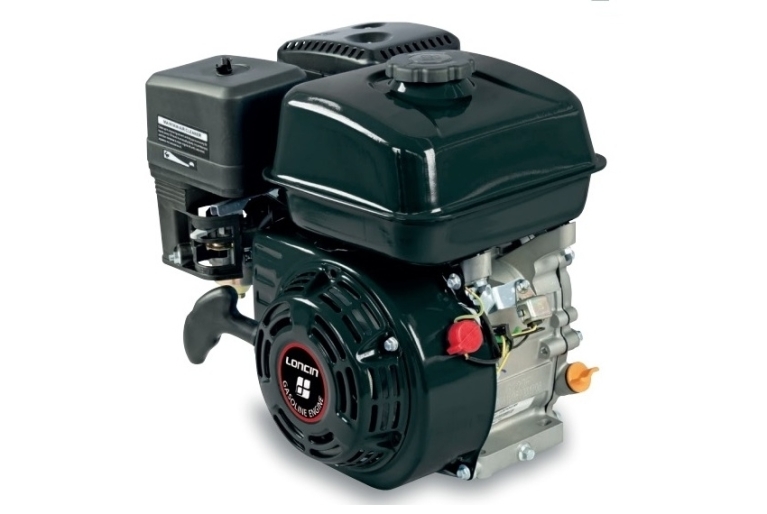
Loncin engines have established themselves as trusted power sources for industrial equipment, delivering outstanding reliability and performance across a wide range of demanding applications – from high-pressure washers and centrifugal pumps to generators and vibratory compactors. This comprehensive guide examines engine specifications, build quality, starting systems, maintenance schedules, troubleshooting procedures, and parts availability, so professional buyers, OEMs and service technicians can make informed decisions with confidence.
Loncin engines are single- and twin-cylinder internal combustion power units manufactured by Loncin Industries Ltd., a group founded in 1993 and headquartered in Chongqing, China. The portfolio covers petrol engines from 6.5 HP horizontal-shaft units up to twin-cylinder configurations for heavier-duty machinery, with a diesel range also available for off-grid and stationary applications.
All industrial models share a common engineering philosophy: overhead-valve (OHV) architecture, precision-balanced crankshafts and cast-iron cylinder bores. This combination delivers the durability and predictable service intervals that industrial operators depend on, at an acquisition price that makes Loncin a commercially compelling specification for OEMs and fleet buyers alike.
Unlike the aluminium-bore engines common in lower-cost equipment, Loncin industrial engines feature cast-iron cylinder liners that resist scoring under continuous-duty conditions. This is particularly relevant in dusty environments like construction sites, agricultural settings, and outdoor washing operations where abrasive particles inevitably reach the intake. Cast-iron liners also tolerate the thermal cycling of frequent start-stop operation better than aluminium alternatives, making them the appropriate choice for hire-fleet equipment.
Mid- and high-output Loncin engines use a gear-driven oil pump rather than the splash lubrication found in entry-level units. Full-pressure lubrication delivers a consistent oil film across bearings and cylinder walls regardless of operating angle, supporting longer service intervals and sustained reliability at high inclines: a real-world advantage for pump and generator sets that don't always sit perfectly level on site.
The overhead-valve configuration improves combustion efficiency and reduces heat rejection compared to older side-valve designs. Combined with dynamically balanced crankshafts, Loncin engines achieve smooth operation that minimises the vibration transmitted to driven equipment — relevant for pressure washer frames, pump housings and generator sets where structural fatigue from engine vibration shortens the life of ancillary components.
|
Model |
Displacement |
Max Power |
Type |
|
G200 |
196 cc |
6.5 HP @ 2,500 rpm |
Single cylinder |
|
G210 |
212 cc |
7.0 HP @ 2,500 rpm |
Single cylinder |
|
G270 |
270 cc |
9.0 HP @ 2,500 rpm |
Single cylinder |
|
G420 |
420 cc |
14.0 HP @ 2,500 rpm |
Single cylinder |
|
LC2V80FD-A |
764 cc |
24.5 HP @ 2,800 rpm |
Twin-cylinder |
The G200 is the standard specification for compact, portable cold-water pressure washers built around triplex pumps in the 10–12 L/min range. Its 6.5 HP output suits intermittent-use applications — vehicle cleaning, agricultural equipment washing and workshop use — where portability and low unit weight are primary constraints. Recoil start as standard eliminates battery management in the field, keeping the overall system simple and reliable for single-operator use.
The G210 is designed for professional cold-water washers operating at 12–15 L/min, covering the range where the G200 leaves insufficient load headroom. The additional 0.5 HP over the G200 may appear marginal, but in practice it sustains performance without thermal stress across extended duty cycles — making the G210 well-suited to self-service car wash bays and small fixed washing installations where the machine runs continuously throughout the working day.
The G270 is the benchmark engine for contractor-grade pressure washers delivering 15–20 L/min at 180–220 bar. Full-pressure lubrication and cast-iron cylinder bore make it the correct specification wherever sustained run-time defines the duty: hire-fleet washers, industrial cleaning contracts and car wash systems operating across a full working day. The G270 is available with electric start for installations requiring frequent or unattended starting.
The G420 drives high-output pumps delivering 20+ L/min at sustained pressures above 250 bar, making it the minimum specification for heavy industrial washing, surface preparation and drain and sewer jetting. Its 14 HP output also covers hot-water washer units where the engine simultaneously drives the pump and the burner blower circuit. For centralised pump stations serving multiple self-service car wash bays, or for engine-driven fire-fighting pumps requiring immediate full-power availability, the G420 is the standard specification.
The LC2V80FD-A is the highest-output engine in the Loncin range: a 764 cc twin-cylinder unit producing 24.5 HP, with electric start as standard and a cylindrical shaft available in 25.4 mm or 28.57 mm to match a broad range of gear reducer and pump coupling specifications. It is designed for coupling with piston pumps via a gear reducer — the correct configuration for very high-pressure, high-flow washing systems. Air-cooled with dry air filtration,it’s suited for permanent or semi-permanent installations in enclosed wash bays, heavy industrial process washing, large-scale car wash installations and professional fire-fighting pump units requiring maximum sustained output.
Loncin industrial engines are available with recoil (manual) start, electric start, or — on larger models — both options combined, giving equipment designers and fleet operators meaningful flexibility depending on the installation context.
Recoil start remains the default on engines up to approximately 9 HP. It requires no battery, no starter motor and no charging circuit, keeping the overall system simple, lightweight and low-maintenance. For portable pressure washers, transfer pumps and compactors that move between sites frequently, recoil start minimises the risk of a flat battery causing downtime. The trade-off is operator effort, particularly on cold mornings or when the engine has not been run for an extended period.
Electric start becomes the practical choice in three scenarios:
Electric start systems on Loncin engines use a conventional pre-engaged starter motor and standard 12V lead-acid or AGM battery. Keep battery terminals clean and ensure the charging circuit is functioning to avoid a depleted battery after extended idle periods.
Dual start configurations (recoil as backup to electric) are available on selected G-series models and are worth specifying for critical applications — generator sets or pump stations where a starter motor failure must not result in a complete machine outage.
Following the manufacturer-recommended service intervals is the single most impactful factor in long-term engine reliability. For Loncin G-series industrial engines:
|
Interval |
Service Action |
|
First 20 hours |
Initial oil change — SAE 10W-30 or 15W-40 depending on ambient temperature |
|
Every 50 hours / annually |
Oil change, air filter inspection, spark plug check (gap 0.7–0.8 mm) |
|
Every 100 hours |
Air filter replacement, spark plug replacement, fuel filter inspection |
|
Every 300 hours |
Valve clearance check: intake 0.10–0.15 mm; exhaust 0.15–0.20 mm (cold) |
Using the correct oil grade for the operating temperature range is not optional — too light a grade in high-ambient conditions accelerates bore and bearing wear; too heavy a grade in cold conditions delays oil circulation at startup, when the majority of engine wear occurs.
Hard starting after storage: Almost always caused by varnished carburettor jets from stale fuel. Prevention: drain the float bowl before any storage period exceeding 30 days, or treat the fuel with a stabiliser. Cure: remove and clean or replace the carburettor main jet and emulsion tube.
Loss of power under load: Before suspecting internal engine issues, check the air filter (a clogged filter accounts for the majority of power complaints), verify fuel is fresh, and confirm the spark plug is within specification. A restricted fuel cap breather can also cause a lean-running condition under sustained load.
Fuel leaking from carburettor: Float needle wear is the typical cause on higher-hour engines. Genuine Loncin carburettor repair kits — including float needle, seat, gaskets and main jet — address the majority of carburettor-related failures at low cost.
Engine vibration above normal levels: Check engine mounts for fatigue or loosening (common on compactor applications), verify the driven coupling or belt is balanced, and inspect the flywheel key for shear damage — a sheared flywheel key causes ignition timing loss that manifests as both vibration and difficult starting simultaneously.
For pressure washer and pump applications, avoid increasing governed speed beyond the rated maximum to chase higher flow or pressure. Over-revving accelerates wear on the cylinder bore, valve train and crankshaft bearings, and invalidates the warranty. The correct approach to increasing pump output is to match the pump's hydraulic specification to the engine's rated torque curve — not to exceed engine speed limits.
On carburetted models, the pilot circuit and main jet are factory-calibrated for sea-level operation. At altitudes above 1,000 m, reduced air density richens the mixture, increasing fuel consumption and carbon deposits. A leaner main jet — typically one size down — restores the air/fuel ratio. If the engine runs rough at idle with black exhaust smoke at altitude, lean the pilot screw by ¼-turn increments until idle smooths. Always re-adjust when returning the equipment to lower altitudes.
In permanent or semi-permanent installations (skid-mounted pump sets, generator enclosures), ensure the engine has unrestricted access to cool, clean air. A 10°C rise in intake air temperature reduces air density sufficiently to drop output by approximately 1%, which accumulates meaningfully in enclosed plant rooms. Where possible, duct fresh external air directly to the air filter housing. On the exhaust side, excessive back-pressure from long or undersized exhaust runs reduces scavenging efficiency — keep exhaust runs as short and straight as practical.
Loncin engines operate at peak thermal efficiency between 70–85% of rated load. Running a 14 HP engine at 30% load to drive a small pump wastes fuel and promotes bore glazing from incomplete combustion. If an application consistently operates below 60% of rated engine capacity, stepping down to a smaller displacement model — a correctly loaded G270 will consume less fuel and last longer than an underloaded G420.
For the full range of industrial and OEM applications, the Loncin G-series and LC-series engines deliver dependable performance, low fuel consumption and predictable service intervals at an acquisition cost that makes them a commercially compelling choice for both OEM builds and direct equipment procurement.
Selecting the right engine for a washing application involves more than matching horsepower to pump flow. Shaft dimensions, duty cycle, start configuration and emissions compliance all affect the final specification. The Emiltec technical team works directly with OEMs, equipment assemblers and washing system installers to identify the correct Loncin engine for each application — and to ensure parts availability and after-sales support are in place before the machine leaves the workshop.
Get in touch to discuss your project and identify the correct Loncin engine for your model.



 Digital Marketing