
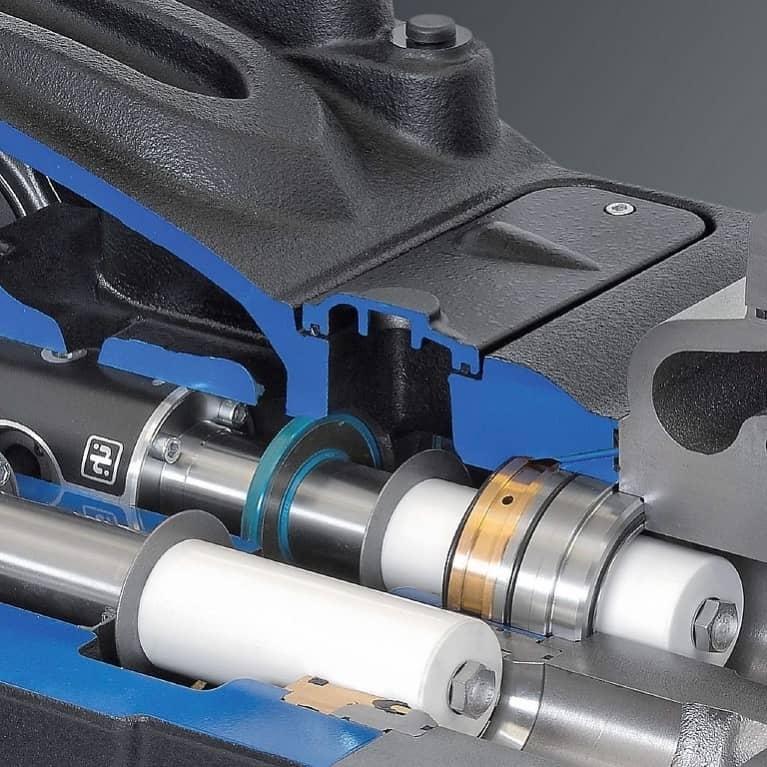
High-pressure plunger pumps represent the pinnacle of industrial pressure-generation technology. This in-depth guide examines the reciprocating mechanisms and pressure-chamber design that make plunger pumps extraordinarily effective, the materials science behind ceramic plungers and brass and steel components, and the performance parameters, flow rates, pressure capabilities, efficiency, that determine the right pump for every application. You will also find practical maintenance protocols, troubleshooting procedures, and installation best practices that extend pump service life in the most demanding industrial environments. Whether you are selecting industrial pumps for high-pressure washing, reverse osmosis, fire prevention, or hydrodemolition, this article provides the engineering foundation you need to make an informed decision.
High-pressure plunger pumps are positive-displacement mechanical devices designed to convert rotary mechanical energy into fluid energy at very high output pressures. Unlike centrifugal pumps, which rely on velocity transfer, plunger pumps operate through the reciprocating movement of one or more cylindrical plungers inside precisely machined cylinders. Each forward stroke compresses the fluid and forces it through the outlet valve; each return stroke draws fresh fluid through the inlet valve. The result is a highly controllable, high-efficiency pressure-generation cycle capable of sustaining output pressures from a few hundred bar up to more than 1,000 bar.
Emiltec, headquartered in Reggio Emilia, has built its catalog around this technology, distributing high-pressure pumps from world-leading manufacturers such as Interpump, Hawk, Udor, Annovi Reverberi, Bertolini, Comet, Mazzoni, HPP, and Pratissoli. The breadth of this offering reflects the versatility of the plunger-pump platform: a single operating principle scales from light commercial washing all the way up to ultra-high-pressure industrial cutting and demolition.
Understanding plunger pump operation starts with the reciprocating mechanism. A crankshaft or cam assembly converts the rotary motion of the drive unit into the linear, back-and-forth stroke of the plunger. The stroke length and bore diameter together define the displacement per cycle, while the rotational speed of the drive determines how many cycles occur per minute. These three variables stroke, bore, and speed are the master parameters behind every pump's flow-rate specification.
Inside the pressure-generation chamber, two sets of check valves govern fluid direction. Inlet valves open during the suction stroke, admitting fluid from the supply line; outlet valves open during the compression stroke, allowing pressurized fluid to exit toward the circuit. Both valve sets must open and close with extreme precision at every cycle. Stainless-steel construction and spring-loaded seating mechanisms ensure rapid, positive sealing even at the high cycle frequencies typical of professional industrial pumps.
The triplex configuration three plungers offset by 120° has become the standard in professional applications. The phase offset smooths out the inherent pressure pulsations of the reciprocating cycle, producing a more uniform flow that reduces stress on downstream hoses, valves, and nozzles.
The longevity and reliability of high-pressure plunger pumps depend critically on the materials used for each internal component. Two families of materials dominate modern pump construction.
The plunger is the component subjected to the most intense mechanical and tribological stress in the entire pump. Modern plunger pump parts use ceramic plungers, typically aluminum oxide or zirconia, because of their exceptional hardness, wear resistance, and dimensional stability. A ceramic plunger maintains its surface finish over millions of cycles, preserving the integrity of the sealing system and keeping internal leakage to a minimum.
The pump head, the block that contains the cylinders, valves, and sealing seats, is typically manufactured from brass, nickel-plated brass, or, for the most demanding chemical environments, AISI 316 stainless steel. The Emiltec catalog includes the Interpump 70SS series, in which the manifold and all internal metal components in contact with water are made of AISI 316 stainless steel, making those pumps suitable for aggressive chemical products, demineralized water, and seawater. Stainless-steel construction is especially common in the food, pharmaceutical, and chemical industries, as well as in reverse osmosis systems.
Plunger pump parts include a sealing system that must maintain its integrity under continuous reciprocating motion at high pressure. High-performance polymer seals, often reinforced PTFE or composite materials are engineered to minimize friction while withstanding both the mechanical stress of the plunger stroke and the chemical action of the pumped fluid. The condition of these seals is the single most important factor in preventive maintenance.
Selecting the right pump from the Emiltec range requires matching three key performance parameters to the demands of the application.
Maximum working pressure. The Emiltec catalog spans from entry-level pumps suited to commercial washing all the way up to the Pratissoli KV series, which reaches pressures up to 1,100 bar, the level required for hydrodemolition, hydro-sandblasting, and surface preparation involving rust or paint removal.
Flow rate. Flow rate, expressed in liters per minute (l/min), determines the volumetric throughput of the system. The Pratissoli MW series, for example, delivers flow rates up to 400 l/min at pressures up to 300 bar. Higher flow rates are essential wherever large surface areas must be treated rapidly or where a combination of high pressure and high volume is needed, such as in firefighting or pipe unclogging.
Efficiency. One of the most significant advantages of plunger pumps over centrifugal alternatives is their volumetric efficiency. With equal flow rates, plunger pumps require approximately 40% less electricity than centrifugal pumps, translating into lower operating costs and a reduced environmental footprint over the entire service life of the machine.
Temperature capability is equally important. The Interpump 66 VHT (Very High Temperature) series, distributed by Emiltec, can operate continuously with water temperatures up to 110 °C, making it suitable for washing systems in the food and pharmaceutical industries where hot-water cleaning is standard practice.
For a comprehensive overview of the complete pump range, visit the Emiltec pump catalog, where every series is classified by maximum pressure and flow rate to simplify selection.
The versatility of the high-pressure plunger pump architecture has made it indispensable across a wide range of sectors. The following are the principal application domains covered by the Emiltec product offering.
High-pressure washing (pressure washers). High-pressure washing is the most representative and widespread application of plunger pumps, and it forms the core of Emiltec's business. Professional and industrial pressure washers use plunger pumps to generate high-pressure water jets capable of removing dirt, grease, scale, and residue from virtually any type of surface, from industrial equipment and flooring to heavy vehicles and production plants. The pumps in the Emiltec range, sourced from leading manufacturers such as Interpump, Hawk, Udor, and Annovi Reverberi, cover the full spectrum of performance requirements: from compact machines for professional use to fixed systems for continuous industrial washing, with pressure and flow rate selectable according to the type of surface and the degree of contamination to be treated.
Car wash. The car wash sector is one of the most demanding and technically complex application environments for high-pressure plunger pumps. Professional car wash installations require pumps capable of operating continuously, cycle after cycle, delivering consistent pressure and flow rates to ensure uniform wash results on every vehicle. The mechanical reliability and long service life of plunger pumps make them the preferred choice for facilities that operate many hours a day, where any unplanned downtime translates directly into economic losses. Emiltec offers pumps and accessories specifically selected for the car wash sector, backed by broad spare parts availability and the technical support needed to guarantee uninterrupted plant operation.
Industrial cleaning. High-pressure water jets produced by industrial pumps dislodge contaminants, descale surfaces, and prepare substrates for coating or treatment. Pressures between 200 and 500 bar are common in applications such as the removal of rust, paint, or industrial residues, where mechanical abrasion must be replaced or supplemented by water-jet force.
Hydrodemolition and hydro-sandblasting. At pressures above 500 bar, water jets carry enough kinetic energy to cut through concrete, remove deteriorated material from reinforced structures, and carry out precision demolition without the vibration damage associated with mechanical tools. The Pratissoli KV series, with its capability up to 1,100 bar, is specifically designed for these ultra-high-pressure tasks.
Reverse osmosis. Membrane-based water treatment processes require consistent high pressure to force water through semi-permeable membranes. The stable volumetric output and high efficiency of plunger pumps make them the preferred choice for reverse osmosis systems in both industrial and municipal water-treatment plants.
Fire prevention and firefighting. Applications in fire prevention demand the simultaneous combination of high pressure and high flow rate. Plunger pumps deliver both, making them suitable for fixed and mobile firefighting systems as well as misting installations used in industrial fire suppression.
Food, pharmaceutical, and chemical industries. Wherever the pumped medium is aggressive, hygienic standards are paramount, or contact with certain metals is prohibited, stainless-steel pump heads and AISI 316 manifolds provide the necessary material compatibility. These industries also benefit from the precise flow control that positive-displacement high-pressure pumps offer.
Knowing the function of each major plunger pump component is essential both for correct selection and for effective maintenance. The main sub-assemblies are:
Crankcase. The structural housing that supports the crankshaft and connects the rods to the plungers. Cast from high-strength alloys, it must resist the cyclical forces of reciprocating motion over decades of service.
Plungers. Ceramic-coated or solid-ceramic cylindrical elements that generate pressure through their forward stroke. Their surface hardness determines seal life and internal leakage.
Pump head (manifold). The high-pressure block containing the inlet and outlet valve seats, the pressure chambers, and the sealing assemblies. The material, brass, hardened steel, or stainless steel is chosen based on operating pressure and fluid compatibility.
Inlet and outlet valves. Spring-loaded check valves that control fluid direction. Stainless-steel construction and precision spring mechanisms ensure rapid actuation at high cycle rates.
Seals and packings. The dynamic sealing elements around each plunger. Regular inspection and replacement of these components is the cornerstone of any preventive maintenance program.
Emiltec stocks spare parts for the most widely used pump models on the market, ensuring rapid parts availability and minimizing downtime during maintenance interventions.
Proper maintenance is the most reliable strategy for maximizing the service life of high-pressure plunger pumps and maintaining consistent pressure-generation performance over time. Maintenance activities fall into three categories: routine checks, periodic servicing, and condition-based interventions.
Routine checks should be carried out before each operating session. They include verifying the oil level in the crankcase, checking for external leaks at hose connections and valve covers, and confirming that the inlet water supply is clean and at adequate pressure. Running a plunger pump against a restricted or absent water supply is one of the most common causes of accelerated seal wear and pump damage.
Periodic servicing typically encompasses oil changes at the intervals specified by the manufacturer, inspection and replacement of dynamic seals and packings, valve inspection, and checking the coupling alignment between the pump and its drive unit. The frequency of these interventions depends on duty cycle and operating conditions: continuous industrial use demands shorter service intervals than intermittent commercial use.
Condition-based interventions are triggered by observable symptoms. A progressive drop in maximum achievable pressure almost always indicates worn seals or damaged valves. Excessive vibration or noise may signal a coupling misalignment or a crankshaft bearing approaching the end of its service life. Early recognition of these symptoms avoids secondary damage and keeps repair costs manageable.
For a deeper analysis of the advantages and potential limitations of this technology, the Emiltec blog article on plunger pumps: advantages and disadvantages provides a thorough technical review.
Correct installation is as important as component quality in achieving long-term, trouble-free operation of high-pressure pumps. The following principles apply across the entire range of industrial pumps in the Emiltec catalog.
The pump must be mounted on a rigid, level surface that absorbs vibration without transmitting it to the pipework. Flexible hose connections on both the inlet and outlet sides reduce the stress transmitted to fixed pipe fittings and help dampen the residual pulsations characteristic of reciprocating pressure generation.
Inlet-side design deserves particular attention. The supply line must be adequately sized to avoid cavitation, a condition in which water vapor bubbles form inside the pump head, collapse violently, and erode internal surfaces. Short, straight inlet runs with a diameter larger than the pump's rated inlet port size minimize hydraulic resistance and ensure that a full, vapor-free water column reaches the pump.
Drive-unit alignment is critical for systems using direct or flexible-disc couplings. Angular and parallel misalignment between the pump shaft and the motor shaft generate cyclical bending loads on the crankshaft and bearings that can dramatically shorten pump life. Modern motor-pump units, such as those available in the Emiltec range, address this by integrating pump and motor on a common baseplate with a factory-aligned coupling, eliminating the most common source of installation error. For more information on integrated drive solutions, see the Emiltec motor pump units section.
Selecting the optimal high-pressure plunger pump for a specific application requires the systematic evaluation of several interrelated parameters. A structured approach avoids both under-specification, which results in poor cleaning or process performance and over-specification, which inflates acquisition and running costs unnecessarily.
The first step is to define the required output: maximum working pressure in bar and minimum flow rate in liters per minute. These two values together establish the hydraulic power that the pump must deliver and, from that, the minimum drive power required. The second step is to consider the operating environment: ambient temperature, duty cycle, fluid temperature, and the chemical nature of the pumped medium all influence material selection. The third step is to assess the available infrastructure: electrical supply (single-phase or three-phase) or internal combustion engine, space constraints, and portability requirements.
Emiltec's experienced sales team is available to guide customers through this decision-making process, matching application requirements to the most suitable pump model from the portfolio of industry-leading brands in the catalog.
High-pressure plunger pumps remain the engineering benchmark for reliable, efficient pressure generation in demanding industrial environments. Their fundamental operating principle, positive displacement through reciprocating plungers, has proven robust over more than a century of continuous development. Modern materials science, particularly the adoption of ceramic plungers and corrosion-resistant stainless-steel manifolds, has extended service life and broadened the range of compatible fluids to encompass the most aggressive industrial media.
For professionals selecting or maintaining industrial pumps, the key to consistently excellent performance lies in three aligned disciplines: precise application matching at the point of specification, rigorous adherence to manufacturer-defined installation standards, and a structured preventive maintenance program that addresses seals, valves, and oil at the correct intervals. Together, these disciplines ensure that a well-chosen plunger pump delivers its rated performance reliably throughout its entire design life.
Emiltec, with its broad product range, direct access to genuine spare parts, and deep technical expertise, is the reference partner for companies and professionals who demand the best from their high-pressure systems.



 Digital Marketing